Total Pageviews

Monday, 16 November 2015

Pioneering work into DNA damage and repair


Tomas Lindahl, an unsung Hero, was awarded the 2015 Nobel Prize for Chemistry along with Paul Modrich and Aziz Sancar. I watched his 4 min short video. A humble man who decided to be in the the field of research. dedicating his entire life for a good cause. 

I would like to remind one more thing. Its the Seventh Nobel Prize and adds to Cancer Research UK tally of Nobel Prizes. A creative genius and a visionary. 
You can read more about it on  http://blueskiesbenchspace.org/index.php?pag=4

Saturday, 20 December 2014

NASA releases global maps of six of Saturn's moons


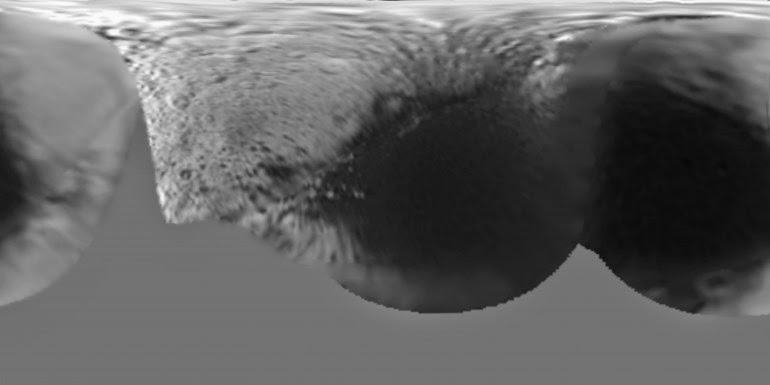
NASA releases global maps of six of Saturn's moons. Over the past decade the Cassini-Huygens mission has done a great deal in order to keep it under intense examination. The global maps also represents the end of one of the legendary spacecraft's key mission objectives. During 1980s, the twin Voyager spacecraft provided some low-resolution maps of some of the bodies orbiting around the giant planet. But there were concerns which lead astronomers and scientists to explore more. And now, Cassini became the answer for their prayers, and over the past 10 years had found new moons, also gave us insight into the formation of Saturn's rings etc. Cassini helped in creation of stunningly-detailed maps of Mimas, Enceladus, Tethys, Dione, Rhea and Lapetus. 


Lapetus as mapped by the Cassini spacecraft


Rhea as mapped by the Cassini spacecraft


Dione as mapped by the Voyager mission


Tethys as mapped by the Voyager missions


Enceladus

Mimas

Rosetta mission reaches the next phase

Rosetta reaches the next phase. Over the next course of year, Rosetta will orbit around and observe a comet (first of its kind & the first to do so)  as it approaches the sun. You can read more on Rosetta mission

Friday, 10 January 2014

A Glue? Instead of Stitches for Heart? Really???

Human Heart

Researchers have developed a glue that might be an alternate for stitches for defects in heart. Jeffrey Karp, a post-doctoral researcher at MIT along with del Nido - a cardiac surgeon and a team of surgeons and engineers worked together to develop the new glue which was recently tested in hearts of living rats and pigs.

Jeffrey Karp have been working on new biodegradable polymers in his entire life time. He ultimately developed a material as a scaffold for growing artificial organs. Currently he is working as researcher with Brigham and Women's Hospital in Boston. In Boston, he met a cardiac surgeon named Pedro del Nido of Boston Children's Hospital. Pedro who specialized in sealing up children's heart defects asked Karp whether there can be an alternative solution for sealing up, something like a glue. But there were a lot of issues such as the glue have to be biodegradable, safe for use inside body, a but stretchy, and strong enough to hold onto a beating muscle which is continually awash in blood. This lead to the incredible invention. Karp's previous experience with cell scaffolding played an important role in the new development. The glue is made of friendly chemicals that cells produce. In the future this glue can be a gentler alternative to the stitching doctors for many surgeries.  
A blood vessel sealed with the New Surgical Glue

Thursday, 9 January 2014

Its time to re-think about our energy sources: See this example!!!


The TidGen Power System takes advantage of one of nature's most consistent energy sources, "The Tide". It sits on the floor of a bay of or deep river, where water rotates the foils that drive a permanent magnet generator, sending about 150 kilowatts of electricity to the shore. The first TidGen Unit, was installed off the coast of Maine last, as a part of the ocean energy project connected to US Grid. Few weeks before an assessment was released and it showed there is no impact on the marine ecosystem. 

I think its time to take a look on to our energy sources, their capabilities and work for the future. Its not late yet... :) 

Is it possible to reflect heat in the same way as light does???

Martin Maldovan Ph.D.
We all know the properties of light. But is it possible to reflect or focus heat in the same way as light does? The question has been answered by Martin Maldovan, a research scientist in MIT's Department of Materials Science and Engineering. He developed a new technique which will provide a new way of manipulating heat. It means heat is going to be controlled as the light waves can be manipulated by lenses or mirrors. 

This technique includes nano structured semiconductor alloy crystals. As we all know "Heat is a resultant of vibration of matter". These vibrations as considered as a stream of phonons (a kind of virtual particle analogous to the photons). In this method spacing of tiny gaps in the nano structured materials are tuned to match the wavelength of the heat phonons. The frequency of the heat phonons were reduced initially bringing it closer to the sound range. Maldoven call it as "hypersonic heat". The new technique made 40 percent of the total heat flow to be concentrated within a hypersonic range and most of the phonons aligned in a narrow beam, instead of moving in every direction. Maldovan says, the new technique along with the material used can bring a wide variety of applications which includes thermoelectric devices, thermal diodes etc. Lets wait and see... :) :D 

You can read more about it on: How to treat heat like light, MIT news

You can also read his latest article "Sound and Heat Revolutions Phononics" on  : www.nature.com

Wednesday, 8 January 2014

Attention please: Some creations that helps the future

This blog have dealt with a lot of technical stories that helped human kind in a great deal. We met a lot of intelligent people, scientists who spend their entire life time on inventions and creations. But today I am writing a different story, a short story but the one which helped their upcoming future. 

Its Douglas Billingtonma, a retired Royal Navy Lieutenant who battled his entire life against the flood waters which came to his home. He and his wife Suzette were attracted by the romance of the rural wilderness, which blooms into a colourful countryside paradise during summer months. Hence they bought what could be Britain's most flood prone home. 

The isolated rural home sits on its marooned flood island. 200 yards from the River Tone on the Somerset Levels which was regularly found submerged under 3 feet of water. They kept a boat nearby ready, every time the flood comes. But this time when high winds and deadly storms paved their path for severe floods which effected most of the parts of Britain, only one home stood with the head raised like ever before. It was this home which fought against the flood the entire life time. 

Douglas Billington who has now sadly died, encircled his two-acre garden with a clay flood bank. It was almost about 6 ft high which helped to protect the home from severe floods. This story attracted me mainly for the dedication and hard work that he showed all the way to protect his home. A creation which no one thought to be a success and a lesson for all. :) :D  
Home of Douglas Billington near taunton remains protected by clay banks

The view of the home in 1990 when the flood hit rural area

Douglas Billington, who has passed away, battling the flood waters in the 1990s

Douglas Billington built the 6 ft clay bank and standing near by- August 2000 floods


Monday, 6 January 2014

Molecular Communication: An important breakthrough- Text message using Vodka??

"A major breakthrough in communication making impossible to possible :) "

Scientists at the University of Warwick in the UK and the York University in Canada, have developed a molecular communications system for the transmission of messages and data in the toughest environments. This technique can be used for a wide range of applications where the EM (electromagnetic waves) waves cannot be  used. For example, underground structures such as pipelines, tunnels or in underwater environments. 

The need for conveying information over a distance, especially in hard environments has always been a difficult task. Many techniques were brought, for e.g.: em waves, electrical signals, smoke signals etc. As we know the modern communication systems depend mainly on electrical and em signals. But there are many applications and extremely small dimensions where these technologies are not up to the task. 

Now the Scientists came back to the nature asking for help. Inspired by the nature, they developed a technique where chemical signals are used as carriers, which is referred as molecular communication. Another important factor is, they can be used at micro and nano scales. Molecular communication signals are bio compatible and they need only very little energy to generate and propagate. Moreover its much more cost effective, simple and robust. 

Any communication system can be broken into three major parts: the transmitter, the receiver and the channel. The transmitter send information in the form of discrete signals, which can be a string of binary numbers to the receiver. The transmitter also uses an encoder to encode the information. A channel encoder block is usually used at the transmitter end which introduces redundancy by adding extra bits. The receiver in turn have a decoder to do the reverse process. In between a modulation process happens where the transmitter modulate the channel signals on to carrier signal and release it for propagation in the channel. The channel might could be a wire where electrical signals propagate or air with em waves. In between these transmissions a number of interferences or disturbances can happen that might affect the information. Hence such a transmission, reception system cannot be used efficiently in extremely hard environments. 

 Scientists now brought a new system where the transmitter takes the input message, converts into a sequence of binary bits and modulates them on a chemical signal for propagation in the channel. The transmitter system consists of Arduino Uno open-source electronics prototyping platform, which is an ATmega328 based micro controller board. To convert the test message to binary sequence, they used International Telegraph Alphabet No.2 standard, where every letter is represented using five bits. To modulate the channel symbols into chemical signals, they use an electronic spray called DuroBlast made by Durotech Industries. At the receiver end too they use Arduino Uno open-source micro controller for programming and controlling receiver operations. 

Transmitter Design


Receiver Design
The first demonstration signal was performed in Canada and was 'O Canada,' from the Canadian national anthem. It was sent several metres across open space before it was decoded by a receiver. The scientists believe this technique can be used widely for a number of applications in hostile underground environments to nanotechnology. I cant wait for more... :) :D  

                        Check out this video


Friday, 3 January 2014

A laser rifle- a spectacular tool

A German laser weapon hobbyist Patrick Priebe has made a laser rifle which could be one heck of a tool for highlighting. The aluminium bodied 12-lb (5.4-kg) rifle incorporates a 7-watt infrared burning laser along with a 2-milliwatt red aiming laser. The power comes from an 18 V rechargeable battery pack converted to run at 12,000 volts while a 12 V pump circulates one litre of distilled water to help keep things cool. An LCD indicated when the temperature of that water is getting too high the rifle has to stop shooting. It works best at a distance of about 13 feet from its target. A number of applications yet to come from this spectacular maker. 

                        Watch this video


Thursday, 2 January 2014

A breakthrough for Sight Loss


Latest News from Cambridge University says, they have been able to successfully print new eye cells which could be used to treat sight loss. The work was carried out using animal cells and it was a success. This opens a new age and hope for people who are affected with sight loss.  

The tests are at initial trials. Most are tests are waiting ahead before human trials. Initial experiments were conducted on adult rats. An inkjet printer was used to print two types of cells from the retina of adult rats, ganglion and glial cells. These are the cells that transmit information from eye to specific parts of brain, and provide support and protection for neurons. Currently the printed cells remains healthy and also retained their ability to survive and grow in culture. 

Even though the tests are conducted on these cells, scientists says that their aim is to use this concept and technology to use in retinal repair in the future. That is, attempt to print cells such as light-sensitive photoreceptors such as rods and cones. They have already been able to reverse blindness in mice using stem cell transplants. I hope this can be a major breakthrough in medical science and I am always inspired and motivated by "what the technology does in the field of medical science".  :) 

                           Watch this video


Thursday, 19 December 2013

World's First Camouflage Clothing


You may wonder why I said World's First Camouflage Clothing when we have a lot of camouflage clothing available in the market. Yes, you are right. There are a lot of camouflage clothings available but they are used only for a single camouflage purpose. What if the season changes? There comes the relevance of Cabela's new color-changing ColorPhase apparel. Now wonder why it became the first of its kind. 

According to Cabela, ColorPhase is the world's first camouflage clothing printed with rapid-change, temperature-activated dye. This means based on seasons temperature the colour of the fabric changes. ColorPhase camo will begin changing colours at 65 degrees Fahrenheit. This allows soldiers as well as hunters to blend perfectly with the environment. 


                                                        Watch this video

Wednesday, 18 December 2013

Google Cloud Print - Easier life for Users and Administrators


Google have always played an important role is developing web related applications making the life of users and administrators simple and easier. A new technology has been developed which helps to connect your printers to the web. It is called 'Google Cloud Print'. With the help of this technology we can make our printers available for us as well as for others whom we decide to choose, from the applications. This technology works on our phone, tablet, Chromebook, PC, and any other web-connected devices were we want to print from. Google Cloud Print works with all printers, but its always recommended to use a Cloud Ready Printer, since it can give us best printing performance. 

HOW TO SET UP A GOOGLE CLOUD READY PRINTER

It always easy to get start with a printer that's Google Cloud Ready. Consider an example where we try to set up a Canon Pixma MX922 as the Google Cloud Ready Printer. Each printer set up varies, but most of the times the instructions are easier to follow and I do believe you will not have any problems in setting up a printer. 

First we have to connect the printer to broadband or Wi-Fi network and register it with Google through the printer's onboard menu system. It will give us a shortened URL and QR Code which we can use on our phone or computer to log into our Google account and complete the registration. Its always better to finish registration quickly since we have only 14 minutes to do it. After registration is completed, we can go to this Google page to manage all of our printers. There we can see which printers we have, when they were added, the print jobs that have been completed etc. Its pretty a decent brief which can be used in future too. 


ADDING A STANDARD PRINTER TO GOOGLE CLOUD PRINT

If you dont already have a Google Cloud Ready printer, we can set up a regular one. First we have to make sure the printer is connected to the computer and make sure the latest printer drivers and Google's Chrome browser are installed. 

Using Chrome, log into the Google account and go to Settings>Show Advanced Settings. Then scroll under the Google cloud Print section and click the Manage button. 


Here we can see all our printers listed under My devices. Under Classic printers, click the Add printers button. 


For example if we are adding Canon MP495, make sure its checked and Click the Add printers(s) button at the bottom. For convenience we can also select automatically register new printers. 


This technology is easy to be used through mobiles as well as i-pads. There are a lot capabilities that Google Cloud Ready provide us. Some of them are 
  • Convenience: Cloud Ready Printers can also register themselves directly with the Google Cloud Print service over the home or wireless network. Since they are connected to the web, they can keep their drivers and firmware up to date. Google Cloud Print also works with conventional non-cloud printers, so that we can start with any printer that we own. 
  • Safe: Google Cloud Print takes security very seriously. Documents are transferred over a secure HTTPS web connection. After the job is completed the file is automatically deleted from the servers. In addition we can also delete jobs and their history, at any time. 
  • Share with you friends: Google Cloud Print allows you to share printers with friends, family and co-workers. We can also track the jobs done by these printers, share with trusted individuals etc. 
  • Chromebook ready and Enterprise ready: Google Cloud Print is the standard printing technology used by ChromeOS on Chromebooks. In the enterprise level, the Google Cloud print is used on over a thousand printers. It can meet the organization's requirements easily. 
At the end I would say, the Google Cloud Print makes the life easier of both system administrators and users. Not only that, less headache for organizations. :) :D 


Tuesday, 17 December 2013

A new promise for Electronics

Comparison of graphene oxide before (left) and after (right)
A team of researchers from MIT and University of Berkeley have found a new simple inexpensive method for a variety of applications. 

Do you wanna know the Hero of the Story? :) Yes, Ofcourse. Its Graphene, a two-dimensional array of carbon atoms. The new method was published in Journal Nature Chemistry  which was co-authored by MIT students Priyank Kumar, Neelkanth Bardhan and MIT professors Jeffrey Grossman and Angela Belcher and other two authors from Berkley. 

In fact, pure graphene lacks some key properties needed for electronic devices, solar power and sensors. But when it is modified through the addition of oxygen, it can provide all the essential properties required. The group did a new approach in which they exposed the material to relatively low temperatures. But the key point is, they havent used any chemical treatments. The low-temperature annealing process itself modified the distribution of the oxygen atoms, causing them to form clusters and leaving the areas of pure graphene between them without introducing any sort of disorder to its structure. The material earns a lot of capabilities such as ability to absorb visible light, becomes much electrical sensitive and further more which can be used in wide variety of applications such as solar cells etc. 

Monday, 16 December 2013

Bluetooth Smart Radio


Imec, Holst Centre and Wicentric introduced an ultra-low power Bluetooth Smart radio with a power consumption up to five times lower than radios. They can play an important role in applications such as personal health monitoring systems and smart home applications.


Living Shoes- Dont miss this!!!!!


A mind-blowing discovery have been made. A self-healing shoe printed to fit your foot from building blocks of life itself. At first when I heard about this news I didnt believe at all. But when I came to know the facts I got really surprised. 

Shamees Adens exhibited this product as a part of Wearable Futures event that held in London. It was like a science fiction. Currently scientists have begun to create and utilize the bio-links in the lab, in between Aden has looked all the way down where it can be created along with biological structures. Protocells are tiny structures which can be designed to take on the aspects of life when they are put together. They are tiny, synthetic quasi-living structures which can sense pressure and be the sole of your shoe, cushioning your every step. But when we are not wearing the shoes, they gets into a dormant stage. Once we have stopped using the shoes it can be put into a jay filled with protocell liquid that would allow the shoes to heal itself. 

I would say, science is just beginning to unravel its potential and I hope a lot of things coming up on our way, a day when the injuries are even self healed. Cant say no to that at this point of time. 


Sunday, 8 December 2013

Crystal-Snow Fantasy, I love it


There are times when I really felt to be in snow. Playing around, wandering around and feeling the snow, its touch and enjoy the beauty in its pure white form. During my time in England, Wales and Scotland, I have felt it. Sometimes while watching movies (such as Chronicles of Narnia etc..) I have felt the same. Now the Japanese Designer Tokujin Yoshioka's Spider's Thread is a full-on crystalline fantasy scape, taking his previous work Crystallised Project to a whole new level. Developed via chemical synthesis, Yoshioka's signature crystals are formed through methodical cultivation on the surfaces of select materials. 

The inspiration for the project was a traditional Japanese story, The Spider's Thread, by writer Ryunosuke Akutagawa, widely considered to be the father of Japanese short story. In Japanese Culture, a spider's thread represents hope and fragility, two key elements to Yoshioka's work. 

Take a look below as a snowflake in the studio becomes a crystal forest in a gallery: 


Advanced medical imaging, a new hope for medical field!!!!!

A research team at the University of Nebraska-Lincoln's Extreme Light Laboratory had developed a new way to generate synchroton x-rays, which are high enough in quality for advanced medical imaging, among other applications. 

Physics Professor Donald Umstadter, director of the Lab, led this research project. He compares the synchroton x-ray breakthrough to the development of personal computers, giving more people access to computing power once available only via large and costly mainframe computers. Shrinking components of advanced laser-based technology will increase the feasibility of producing high-quality x-rays in medical and university research laboratories, which in turn lead to new applications for the x-rays. 

The new x-ray device could be small enough to fit in a hospital. This can increase the usage in wide range of applications. 
Doctoral student Nathan displays the electron accelerator used to generate x-ray light